Ever wondered how massive tech platforms like Google, Netflix, or Amazon run so smoothly? It all starts with one powerful foundation: system architecture. This invisible blueprint shapes how software, hardware, and data work together seamlessly.





What Is System Architecture? A Foundational Overview

At its core, system architecture is the high-level structure of a system that defines its components, relationships, and principles guiding its design and evolution. It’s not just about code or servers—it’s about making strategic decisions that ensure scalability, reliability, and maintainability.
Defining System Architecture in Modern Tech
System architecture refers to the conceptual model that defines the structure, behavior, and various views of a system. According to the ISO/IEC/IEEE 42010 standard, architecture encompasses fundamental concepts, properties, and relationships among system elements.
- It acts as a blueprint for both technical and business stakeholders.
- It bridges the gap between user requirements and technical implementation.
- It provides a shared understanding across development, operations, and management teams.
In enterprise environments, system architecture often includes hardware, software, networks, data storage, and security protocols—all working in harmony.
Key Components of System Architecture
A well-defined system architecture consists of several interconnected components. These include:
Processing Units: CPUs, GPUs, or distributed compute clusters that execute logic.Storage Systems: Databases (SQL/NoSQL), file systems, object storage (e.g., AWS S3).Networking Infrastructure: Routers, load balancers, firewalls, and communication protocols (HTTP, gRPC).Interfaces and APIs: REST, GraphQL, or message queues (Kafka, RabbitMQ) enabling inter-service communication.Security Layers: Authentication (OAuth), encryption (TLS), and access control mechanisms.”Good system architecture is invisible—when it works, no one notices.When it fails, everyone does.” — Martin Fowler, Chief Scientist at ThoughtWorksThe Evolution of System Architecture Over DecadesSystem architecture hasn’t remained static..
It has evolved dramatically in response to technological advances, user demands, and business needs.From monolithic mainframes to cloud-native microservices, the journey reflects a continuous pursuit of efficiency, agility, and resilience..
From Mainframes to Monoliths: The Early Days
In the 1960s and 70s, system architecture was dominated by mainframe computers—centralized, powerful machines that handled all processing for large organizations. These systems were reliable but inflexible and expensive.
By the 1980s and 90s, client-server models emerged. Applications were split into two tiers: the client (user interface) and the server (business logic and data). This allowed for more interactive applications and decentralized computing.
Eventually, the monolithic architecture became standard—where an entire application is built as a single, tightly-coupled unit. While simple to develop initially, monoliths became difficult to scale and maintain as applications grew.
The Rise of Distributed and Cloud-Native Architectures
The 2000s brought the internet boom, demanding systems that could scale globally. This led to the rise of distributed architectures—systems spread across multiple machines, often in different locations.
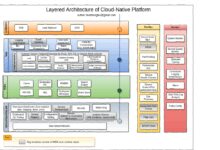
With the advent of virtualization and cloud platforms like Amazon Web Services (AWS), Google Cloud, and Microsoft Azure, system architecture entered a new era. Cloud-native design principles emerged, emphasizing:
- Microservices: Breaking applications into small, independent services.
- Containers: Using Docker and Kubernetes for consistent deployment.
- Serverless Computing: Running code without managing servers (e.g., AWS Lambda).
- DevOps Integration: Automating deployment and monitoring pipelines.
Today’s architectures are dynamic, resilient, and designed for continuous delivery—enabling companies to innovate at unprecedented speed.
Core Principles of Effective System Architecture
Building a robust system isn’t just about choosing the right tools—it’s about adhering to time-tested architectural principles. These principles guide decision-making and help avoid costly mistakes down the line.
Scalability: Designing for Growth
Scalability refers to a system’s ability to handle increased load by adding resources. There are two main types:
- Vertical Scaling (Scaling Up): Adding more power (CPU, RAM) to an existing machine.
- Horizontal Scaling (Scaling Out): Adding more machines to distribute the load.
Modern system architecture favors horizontal scaling due to its flexibility and fault tolerance. For example, Netflix uses horizontal scaling across thousands of AWS instances to serve millions of users simultaneously.
Key strategies include:
- Load balancing to distribute traffic evenly.
- Database sharding to split large datasets across servers.
- Auto-scaling groups that dynamically adjust capacity based on demand.
Reliability and Fault Tolerance
A reliable system continues to operate correctly even when parts fail. This is achieved through redundancy, failover mechanisms, and graceful degradation.
Fault tolerance ensures that a single point of failure doesn’t bring down the entire system. Techniques include:
- Replicating databases across multiple zones (e.g., multi-AZ RDS on AWS).
- Using circuit breakers to prevent cascading failures.
- Implementing retry logic with exponential backoff.
For instance, Amazon’s S3 storage system is designed for 99.999999999% (11 nines) durability, meaning your data is almost guaranteed never to be lost.
Modularity and Loose Coupling
Modular design breaks a system into independent, interchangeable components. Each module should have a single responsibility and minimal dependencies on others.
Loose coupling ensures that changes in one component don’t force changes in another. This is critical in microservices architectures, where services communicate via well-defined APIs.
Benefits include:
- Easier maintenance and updates.
- Faster development cycles.
- Independent deployment of services.
“Make everything as simple as possible, but not simpler.” — Albert Einstein (a principle echoed in minimalist system design)
Types of System Architecture: Choosing the Right Model
There is no one-size-fits-all approach to system architecture. Different models suit different use cases, performance requirements, and organizational goals. Understanding these models helps architects make informed decisions.
Monolithic Architecture: Simplicity vs. Limitations
In a monolithic architecture, all components of an application—UI, business logic, and data access—are packaged together as a single unit. This model is straightforward to develop, test, and deploy for small applications.
However, as the application grows, monoliths face challenges:
- Difficult to scale specific parts independently.
- Longer deployment cycles due to full redeployment.
- Technology lock-in—hard to adopt new frameworks without rewriting everything.
Despite these drawbacks, many legacy systems still operate on monolithic designs, and some startups begin with them for rapid prototyping.
Microservices Architecture: Scalability and Flexibility
Microservices architecture decomposes an application into small, autonomous services that communicate over APIs. Each service owns its data and logic, and can be developed, deployed, and scaled independently.
Advantages include:
- Independent scaling of high-demand services.
- Technology diversity—teams can use different languages and databases.
- Faster time-to-market through parallel development.
However, microservices introduce complexity in areas like distributed tracing, service discovery, and data consistency. Tools like Kubernetes and Istio help manage this complexity.
Companies like Uber, Spotify, and Netflix have successfully adopted microservices to handle massive scale and rapid innovation.
Event-Driven and Serverless Architectures
Event-driven architecture (EDA) is based on the production, detection, and reaction to events. When something happens (e.g., a user places an order), a message is published, and other services react accordingly.
This model enhances loose coupling and enables real-time processing. Common tools include Apache Kafka, Amazon SNS/SQS, and Azure Event Grid.
Serverless architecture takes abstraction further—developers write functions that run in response to events, without managing servers. AWS Lambda, Google Cloud Functions, and Azure Functions are popular platforms.
Benefits of serverless:
- No server management.
- Pay-per-use pricing model.
- Automatic scaling to zero during inactivity.
While powerful, serverless can suffer from cold starts and limited execution duration, making it less suitable for long-running processes.
The Role of System Architecture in Cloud Computing
Cloud computing has revolutionized how we think about system architecture. Instead of owning physical infrastructure, organizations now leverage scalable, on-demand resources from cloud providers.
Cloud Deployment Models: Public, Private, Hybrid
There are three primary cloud deployment models:
- Public Cloud: Services offered over the public internet by third-party providers (e.g., AWS, Google Cloud). Cost-effective and highly scalable.
- Private Cloud: Infrastructure dedicated to a single organization, either on-premises or hosted. Offers greater control and security.
- Hybrid Cloud: Combines public and private clouds, allowing data and applications to move between them. Ideal for organizations with compliance needs or legacy systems.
Choosing the right model depends on factors like regulatory requirements, performance needs, and budget constraints.
Cloud-Native Design and the 12-Factor App
Cloud-native architecture is designed specifically to exploit the benefits of the cloud. The Twelve-Factor App methodology provides best practices for building software-as-a-service apps that are scalable, maintainable, and deployable.
Key factors include:
- Codebase: One codebase tracked in version control, deployed across multiple environments.
- Dependencies: Declare and isolate dependencies explicitly.
- Config: Store configuration in the environment, not in code.
- Backing Services: Treat databases, caches, and message brokers as attached resources.
- Disposability: Design for fast startup and graceful shutdown.
These principles ensure that applications are resilient, portable, and easy to automate—critical for modern DevOps workflows.
Designing a System Architecture: Step-by-Step Process
Creating a successful system architecture isn’t accidental—it follows a structured process that balances technical and business requirements.
Requirement Gathering and Analysis
The first step is understanding what the system must do. This involves:
- Identifying stakeholders (users, developers, business leaders).
- Collecting functional requirements (what the system should do).
- Gathering non-functional requirements (performance, security, availability).
For example, a banking app might require 99.99% uptime (high availability), end-to-end encryption (security), and sub-second response times (performance).
Tools like user stories, use case diagrams, and requirement traceability matrices help organize this information.
Architectural Decision Making and Trade-offs
Every architectural choice involves trade-offs. For instance:
- Choosing consistency over availability (as in ACID databases) vs. availability over consistency (as in eventual consistency models).
- Opting for a relational database for strong consistency vs. a NoSQL database for horizontal scalability.
- Using synchronous communication (REST) vs. asynchronous (messaging queues).
Architects must document these decisions using an Architectural Decision Record (ADR), which captures the context, options considered, and rationale for the final choice.
This transparency helps future teams understand why certain paths were taken.
Prototyping, Testing, and Iteration
Before full-scale development, architects often build prototypes or proof-of-concepts (PoCs) to validate assumptions. This might involve:
- Testing database performance under load.
- Simulating network latency between microservices.
- Validating security controls like OAuth flows.
Testing includes not just functionality, but also non-functional aspects:
- Load testing with tools like JMeter or Gatling.
- Security testing using penetration testing and static analysis.
- Resilience testing with chaos engineering (e.g., Netflix’s Chaos Monkey).
Based on feedback, the architecture is refined iteratively—ensuring it evolves with real-world insights.
Tools and Frameworks for Modern System Architecture
No architect works in isolation. A rich ecosystem of tools supports the design, implementation, and monitoring of complex systems.
Modeling and Diagramming Tools
Visualizing architecture is crucial for communication. Popular tools include:
- Lucidchart: Collaborative diagramming with real-time editing.
- Draw.io (diagrams.net): Free, open-source tool for creating architecture diagrams.
- Microsoft Visio: Enterprise-grade diagramming with integration into Microsoft 365.
- PlantUML: Text-based UML diagrams that can be version-controlled.
These tools help create clear representations of components, data flow, and deployment topology.
Infrastructure as Code (IaC) and Automation
Modern system architecture relies heavily on automation. Infrastructure as Code (IaC) allows teams to define and provision infrastructure using code, rather than manual processes.
Popular IaC tools include:
- Terraform: Declarative syntax for managing multi-cloud environments.
- AWS CloudFormation: Native AWS tool for templating cloud resources.
- Ansible: Agentless automation for configuration management.
- Pulumi: IaC using general-purpose languages like Python and TypeScript.
IaC ensures consistency, enables version control, and reduces human error—making deployments repeatable and auditable.
Monitoring, Logging, and Observability
Even the best-designed systems can fail. Observability—comprising logging, monitoring, and tracing—helps detect and diagnose issues quickly.
Key tools include:
- Prometheus: Open-source monitoring system with powerful querying (PromQL).
- Grafana: Visualization platform for metrics and logs.
- ELK Stack (Elasticsearch, Logstash, Kibana): Centralized logging solution.
- Jaeger: Distributed tracing for microservices.
- Datadog: Commercial platform offering full-stack observability.
Together, these tools provide a holistic view of system health, enabling proactive maintenance and rapid incident response.
Challenges and Pitfalls in System Architecture
Despite best efforts, architects face numerous challenges. Recognizing these pitfalls early can prevent costly rework and downtime.
Over-Engineering and Premature Optimization
One common mistake is designing for hypothetical future needs rather than current requirements. This leads to over-engineering—complex solutions that add little value.
For example, implementing a full microservices architecture for a small application with low traffic is often unnecessary and counterproductive.
As Donald Knuth famously said:
“Premature optimization is the root of all evil.”
Focus on simplicity first, then scale when needed.
Data Consistency and Distributed Transactions
In distributed systems, ensuring data consistency across services is notoriously difficult. The CAP theorem states that a distributed system can only guarantee two out of three: Consistency, Availability, and Partition Tolerance.
Solutions include:
- Using eventual consistency models with message queues.
- Implementing sagas for long-running transactions.
- Leveraging distributed databases like Google Spanner or CockroachDB.
Architects must carefully choose the right consistency model based on business needs.
Security and Compliance Risks
Security must be baked into the architecture from the start, not added later. Common vulnerabilities include:
- Insecure APIs exposing sensitive data.
- Insufficient authentication and authorization controls.
- Unencrypted data in transit or at rest.
Compliance with regulations like GDPR, HIPAA, or PCI-DSS requires architectural considerations such as data residency, audit logging, and access controls.
Adopting a Zero Trust security model—where no user or device is trusted by default—can significantly reduce risk.
What is system architecture?
System architecture is the high-level design of a system that defines its components, their relationships, and the principles governing its structure and evolution. It serves as a blueprint for building scalable, reliable, and maintainable systems.
What are the main types of system architecture?
The main types include monolithic, microservices, event-driven, serverless, and service-oriented architectures (SOA). Each has its own strengths and trade-offs depending on the use case.
Why is scalability important in system architecture?
Scalability ensures that a system can handle growing amounts of work by adding resources. It’s crucial for maintaining performance and user satisfaction as demand increases.
How does cloud computing impact system architecture?
Cloud computing enables flexible, on-demand infrastructure, allowing architects to design systems that are more scalable, resilient, and cost-effective. It promotes cloud-native patterns like containers, microservices, and serverless functions.
What tools are used in system architecture design?
Common tools include diagramming software (Lucidchart, Draw.io), Infrastructure as Code (Terraform, CloudFormation), and observability platforms (Prometheus, Grafana, Datadog).
System architecture is the backbone of every successful software system. From defining core components to choosing the right architectural style, every decision shapes performance, scalability, and maintainability. As technology evolves, so too must our approach—embracing cloud-native principles, automation, and observability. By understanding the principles, tools, and pitfalls, architects can build systems that are not only powerful today but adaptable for tomorrow’s challenges.
Further Reading: