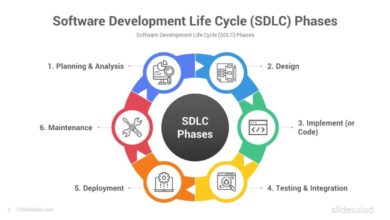
Ever wondered how complex software or business processes are built with precision? It all starts with system analysis—a powerful, structured approach that turns chaos into clarity. Let’s dive into the world where logic meets innovation.






What Is System Analysis and Why It Matters

System analysis is the backbone of any successful IT or business transformation. It involves examining a system—whether technical, organizational, or procedural—to understand its components, functions, and interactions. The goal? To identify problems, improve efficiency, and design better solutions.
Defining System Analysis in Modern Context
At its core, system analysis is about asking the right questions: What does the system do? How does it do it? Where are the bottlenecks? According to the IEEE Computer Society, system analysis is a critical phase in the software development lifecycle (SDLC) that ensures alignment between user needs and technical implementation.
- It bridges the gap between business requirements and technical design.
- It applies to software, networks, databases, and even organizational workflows.
- It’s not just for IT—it’s used in healthcare, finance, logistics, and education.
“System analysis is not just a phase; it’s a mindset focused on understanding before building.” — Dr. Linda Rising, Software Engineering Expert
The Evolution of System Analysis Over Time
System analysis has evolved from manual flowcharts in the 1950s to today’s AI-driven modeling tools. In the early days of computing, analysts used paper-based methods to map data flows. With the rise of structured programming in the 1970s, methodologies like Structured Systems Analysis and Design Method (SSADM) emerged.
Today, system analysis integrates agile practices, cloud architecture assessments, and real-time data analytics. The shift from waterfall to iterative models has made system analysis more dynamic and user-centric. Tools like UML (Unified Modeling Language) and BPMN (Business Process Model and Notation) are now standard in visualizing system behavior.
The Core Objectives of System Analysis
System analysis isn’t just about finding flaws—it’s about creating value. Its primary objectives include improving performance, reducing costs, enhancing user experience, and ensuring scalability. Every project that undergoes thorough system analysis is more likely to succeed because it’s built on a foundation of insight, not assumption.
Identifying Problems and Opportunities
One of the first tasks in system analysis is problem identification. Analysts gather data through interviews, surveys, and observation to pinpoint inefficiencies. For example, a retail company might discover that its inventory system takes 48 hours to update, leading to overstocking or stockouts.
But system analysis doesn’t stop at problems—it also uncovers opportunities. Maybe the same company can integrate real-time sales data with supplier APIs to automate reordering. This proactive approach turns challenges into competitive advantages.
- Use root cause analysis (RCA) to dig deeper than surface symptoms.
- Leverage SWOT analysis (Strengths, Weaknesses, Opportunities, Threats) for strategic insights.
- Apply Pareto Principle (80/20 rule) to focus on high-impact issues.
Improving Efficiency and Reducing Costs
Efficiency is the heartbeat of any system. System analysis helps organizations streamline operations by eliminating redundant steps, automating manual tasks, and optimizing resource allocation. A study by Gartner found that companies using formal system analysis reduced operational costs by up to 30% within the first year.
For instance, a bank analyzing its loan approval process might find that 60% of the time is spent on document verification. By introducing optical character recognition (OCR) and AI-based validation, processing time drops from 5 days to 24 hours—boosting customer satisfaction and employee productivity.
“The best systems aren’t the most complex—they’re the most efficient.” — Tom DeMarco, Author of ‘Controlling Software Projects’
The System Analysis Process: A Step-by-Step Breakdown
System analysis follows a structured process to ensure consistency and completeness. While methodologies may vary, the core steps remain universal. Skipping any step can lead to costly rework or project failure. Let’s explore the seven essential stages.
Step 1: Preliminary Investigation and Feasibility Study
Before diving into details, analysts conduct a preliminary investigation to assess whether the project is worth pursuing. This includes evaluating technical, economic, operational, and schedule feasibility.
- Technical Feasibility: Can we build it with current technology?
- Economic Feasibility: Will the benefits outweigh the costs?
- Operational Feasibility: Will users adopt it?
A hospital considering a new patient management system might find it technically possible but economically unviable if training costs exceed budget. In such cases, phased implementation or open-source alternatives may be explored.
Step 2: Requirement Gathering and Analysis
This is where analysts engage with stakeholders—users, managers, IT staff—to collect functional and non-functional requirements. Techniques include interviews, questionnaires, workshops, and document analysis.
Functional requirements define what the system should do (e.g., “Generate monthly sales reports”), while non-functional requirements cover performance, security, and usability (e.g., “Load reports in under 3 seconds”). The International Institute of Business Analysis (IIBA) emphasizes the importance of clear, testable requirements to avoid scope creep.
Step 3: System Modeling and Design
Once requirements are clear, analysts create models to visualize the system. These include data flow diagrams (DFD), entity-relationship diagrams (ERD), and use case diagrams. Modeling helps stakeholders “see” the system before it’s built, reducing misunderstandings.
For example, a DFD for an e-commerce platform shows how customer orders flow from the website to the warehouse and payment gateway. Tools like Lucidchart or Microsoft Visio make it easy to create and share these models.
Key Techniques and Tools Used in System Analysis
Modern system analysis relies on a blend of proven techniques and cutting-edge tools. Choosing the right combination depends on the project’s size, complexity, and industry. Let’s explore the most effective ones.
Data Flow Diagrams (DFD) and Their Role
Data Flow Diagrams are graphical representations of how data moves through a system. They use simple symbols: circles for processes, arrows for data flow, rectangles for external entities, and open rectangles for data storage.
DFDs are especially useful in identifying data bottlenecks. For instance, a DFD might reveal that customer data is being duplicated across three departments, leading to inconsistencies. By centralizing the data store, the organization improves accuracy and reduces redundancy.
- Level 0 DFD (Context Diagram) shows the system as a whole.
- Level 1 and 2 DFDs break it down into subprocesses.
- Always validate DFDs with stakeholders to ensure accuracy.
Use Case Modeling and UML Diagrams
Use case modeling, part of the Unified Modeling Language (UML), focuses on user interactions with the system. A use case describes a sequence of actions that deliver value to an actor (user or system).
For example, in a library management system, a use case titled “Borrow Book” includes steps like scanning the book, verifying membership, and updating inventory. UML diagrams such as sequence diagrams and activity diagrams further detail the flow.
According to the Object Management Group (OMG), UML is the global standard for visualizing software systems, used by over 80% of enterprise development teams.
“A picture is worth a thousand requirements.” — Grady Booch, Co-creator of UML
System Analysis in Different Industries
System analysis isn’t confined to IT departments. Its principles are applied across industries to solve real-world problems. Let’s look at how it transforms healthcare, finance, and manufacturing.
Healthcare: Optimizing Patient Care Systems
In healthcare, system analysis improves patient outcomes by streamlining electronic health records (EHR), appointment scheduling, and diagnostic workflows. A hospital in the UK used system analysis to reduce patient wait times by 40% by reengineering its triage process.
Analysts mapped the entire patient journey—from arrival to discharge—and identified delays in lab result processing. By integrating lab systems with EHRs and automating alerts, critical results reached doctors 70% faster.
Finance: Enhancing Transaction Security and Speed
Banks and fintech companies rely on system analysis to ensure secure, fast transactions. When a major bank upgraded its core banking system, analysts conducted a thorough impact assessment to prevent service disruption.
They used risk analysis matrices to evaluate potential failures and designed fallback mechanisms. The result? A seamless migration with zero downtime during business hours, maintaining customer trust and regulatory compliance.
Manufacturing: Streamlining Production Lines
In manufacturing, system analysis optimizes supply chains, inventory management, and production scheduling. A car manufacturer used system analysis to reduce assembly line downtime by 25% by identifying machine maintenance bottlenecks.
By implementing predictive maintenance using IoT sensors and real-time data analytics, the company shifted from reactive to proactive maintenance, saving millions annually.
The Role of System Analysts: Skills and Responsibilities
A system analyst is the bridge between business and technology. They must understand both domains to translate user needs into technical specifications. This role requires a unique blend of technical expertise, communication skills, and problem-solving ability.
Essential Skills for a Successful System Analyst
To excel, a system analyst must master several key skills:
- Technical Proficiency: Knowledge of databases, programming, networking, and cloud platforms.
- Communication Skills: Ability to explain complex concepts to non-technical stakeholders.
- Problem-Solving: Using analytical thinking to diagnose issues and propose solutions.
- Project Management: Managing timelines, resources, and stakeholder expectations.
Certifications like Certified Business Analysis Professional (CBAP) or CompTIA IT Fundamentals can boost credibility and career prospects.
Daily Responsibilities and Workflow
A typical day for a system analyst includes:
- Meeting with clients to gather requirements.
- Documenting system specifications and workflows.
- Collaborating with developers and testers.
- Conducting system testing and user training.
- Preparing reports and presenting findings to management.
They often use tools like JIRA for task tracking, Confluence for documentation, and SQL for data analysis. Their work ensures that the final product meets both functional and business goals.
Challenges and Common Pitfalls in System Analysis
Despite its benefits, system analysis is not without challenges. Missteps can lead to project delays, budget overruns, or failed implementations. Awareness of common pitfalls is the first step to avoiding them.
Dealing with Incomplete or Conflicting Requirements
One of the biggest challenges is unclear or contradictory requirements. Stakeholders may have different expectations, or users may not know what they need until they see a prototype.
To mitigate this, analysts use techniques like prototyping and iterative feedback. Agile methodologies, which emphasize continuous delivery and user involvement, are particularly effective in managing evolving requirements.
Managing Stakeholder Expectations
Stakeholders often expect quick results or underestimate complexity. A system analyst must manage expectations by setting realistic timelines, communicating risks, and providing regular updates.
Transparency is key. Using dashboards to show progress and roadblocks helps build trust and keeps everyone aligned.
“The single biggest problem in communication is the illusion that it has taken place.” — George Bernard Shaw
Future Trends in System Analysis
As technology evolves, so does system analysis. Emerging trends are reshaping how analysts work, making the process faster, smarter, and more predictive.
The Impact of AI and Machine Learning
Artificial Intelligence is revolutionizing system analysis by automating data collection, pattern recognition, and even requirement generation. AI-powered tools can analyze user behavior logs to suggest system improvements.
For example, an AI model might detect that users frequently abandon a checkout process at the payment step. Analysts can then investigate and optimize the interface, potentially increasing conversion rates by 15% or more.
Integration with DevOps and Continuous Analysis
The rise of DevOps has led to continuous system analysis. Instead of a one-time phase, analysis now happens throughout the development lifecycle. Monitoring tools provide real-time feedback on system performance, enabling proactive adjustments.
Tools like Splunk and Datadog allow analysts to track system health, detect anomalies, and recommend optimizations in real time—turning system analysis into an ongoing, dynamic process.
What is the main purpose of system analysis?
The main purpose of system analysis is to understand how a system works, identify its strengths and weaknesses, and design improvements that align with business goals and user needs. It ensures that solutions are efficient, scalable, and cost-effective.
What are the key steps in the system analysis process?
The key steps include: 1) Preliminary investigation, 2) Requirement gathering, 3) System modeling, 4) Feasibility study, 5) Design proposal, 6) Implementation planning, and 7) Evaluation and feedback. Each step builds on the previous one to ensure a thorough analysis.
How does system analysis differ from system design?
System analysis focuses on understanding the current system and identifying problems and requirements. System design, on the other hand, is about creating the blueprint for the new system—defining architecture, components, and interfaces based on the analysis findings.
What tools do system analysts commonly use?
Common tools include Lucidchart for diagrams, JIRA for project tracking, SQL for data querying, UML modeling tools like StarUML, and requirements management tools like Jama Connect. The choice depends on the project’s scope and methodology.
Can system analysis be applied outside of IT?
Absolutely. System analysis is used in healthcare to improve patient workflows, in logistics to optimize delivery routes, in education to enhance learning platforms, and in government to streamline public services. Its principles are universally applicable to any structured process.
System analysis is more than a technical exercise—it’s a strategic discipline that drives innovation and efficiency across industries. From defining objectives to leveraging AI, the process empowers organizations to build smarter, faster, and more resilient systems. By mastering its techniques and avoiding common pitfalls, professionals can turn complex challenges into opportunities for growth. As technology continues to evolve, so too will the role of the system analyst—becoming even more integral to the digital future.
Further Reading: